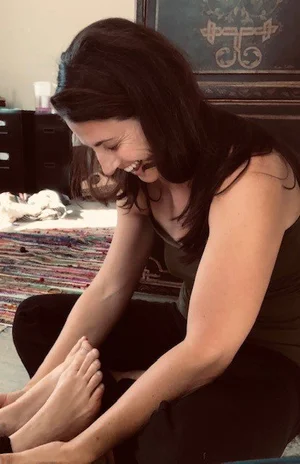
“I highly recommend a massage with Natasha! I came to her after months of struggling with a recurrent UTI and experienced an immense relief and holding that brought me to tears as she worked with my body incorporating the Mayan abdominal massage. There is a warmth and listening in her that only comes from people who practice from a place of devotion. In addition to being one of the most physically skillful practitioners I have worked with, Natasha enters a massage with a palpable reverence that lets my body receive and respond, and extends beyond the treatment. So thankful.”
-N. A
Title: Self-reported symptom improvement following a multicomponent traditional abdominal bodywork session in a client with suspected urinary tract infection pattern.
Participant identifier: N.A.
Encounter date: 4/20/2025
Practitioner credentials: Natasha Zajac- L.M.T, B.M.O, Cert. Mayan Abdominal Practioner, Advanced Cranial Sacral Practioner
Documentation basis: Retrospective practitioner narrative and client-reported follow-up
Diagnostic status: Re-occurring UTI based on reported symptoms; clinician-confirmed diagnosis from Client’s midwife.
S — Subjective
N.A. attended following a recommendation from another client who had reported a favorable experience with traditional Mayan abdominal bodywork.
The client reported severe lower abdominal pain and symptoms she attributed to a UTI, including subjective fever on and off for weeks before the appointment. Specific urinary symptoms—such as dysuria, frequency, and urgency—were described in the intake. Symptom duration, previous confirmed infections, and relevant medical or gynecological history were not documented.
Before the consultation, the client reported using over-the-counter products, cranberry juice, and increased fluid intake without perceived relief.
During the session, the client:
Requested a bathroom break approximately 20 minutes after the initial bathing intervention.
Reported ticklishness or heightened sensitivity during posterior lower-limb massage.
Became tearful during lower abdominal manual treatment and described a sense of release and comfort.
Reported the first perceived symptom relief during the current episode following the session.
At approximately one month, the client reported complete symptom resolution and no recurrence during the follow-up interval.
O — Objective
Available clinical measurements
No temperature, blood pressure, heart rate, standardized pain score, urinalysis, urine culture, pregnancy assessment, or clinician-performed abdominal or pelvic examination was documented.
Practitioner observations
The following observations were recorded:
During the initial bathing intervention, the client’s arms and legs moved into greater external rotation, breathing appeared to deepen, and the eyes closed.
Palpation of the bilateral lumbar paraspinal region was described as identifying increased muscle tension, warmth, and tissue fullness.
Increased sensitivity was noted during manual contact with both posterior lower limbs.
During supine assessment, the practitioner perceived warmth over the suprapubic/lower abdominal region and increased resistance to palpation in the bilateral subcostal region.
The practitioner described an apparent posterior sacral tilt; no standardized postural assessment was reported.
The source narrative also described a presumed low uterine position.
Interventions delivered
A single multicomponent session was administered:
Traditional ceremonial bathing, approximately 20 minutes
Copal was incorporated into the ceremony; the method of use was not specified.
Warm water containing Epsom salts, rue, lemongrass, rosemary, and nettle leaves was used for foot bathing and application to the body.
Prone manual therapy
Manual work over the lumbar, sacral, gluteal, and posterior lower-limb regions, including areas identified within the practitioner’s traditional framework as the “bladder meridian.”
Swedish massage and techniques described as lymphatic massage.
Bilateral leg flexion with support at the calcanei, described as a traditional Mexican midwifery technique.
Tapotement over the thoracic, lumbar, and posterior lower-limb regions.
Supine manual therapy
Sustained hand contact over the lower abdomen, subcostal region, and mid-back.
Traditional Maya abdominal massage applied to the upper and lower abdomen.
Manual strokes intended to elevate and center the uterus.
Additional modalities
A warm castor-oil compress over the lower abdomen for approximately 30 minutes.
Craniosacral techniques described as dural-tube stretching/rocking and CV4.
Bilateral foot reflexology targeting areas traditionally associated with urinary, reproductive, and lymphatic function.
Total session duration totalled 90 minutes with Medium pressure applied to the clients body.
A — Assessment
Presenting clinical concern
The reported symptoms were compatible with recurring UTI’s.
Observed and reported response
The client reported immediate improvement in comfort and subsequent symptom resolution at approximately one month. Observed changes in breathing and posture, together with reported comfort, were consistent with a relaxation response.
Tearfulness and reported emotional release document the client’s experience.
Interpretation and limitations
This case demonstrates a temporal association between a multicomponent complementary intervention and self-reported symptom improvement.
P — Plan
Historical advice and follow-up documented
The practitioner advised:
Self-administered upper and lower abdominal massage.
Continued hydration.
Temporary avoidance of sugar, alcohol, shellfish, and simple carbohydrates.
A client-reported follow-up occurred approximately one month later. No medical referral, urine testing, prescribed treatment, structured safety-netting, or further clinical assessment was documented.
Suggested concluding statement:
Following a single session combining traditional bathing, abdominal bodywork, massage, compress application, craniosacral techniques, and reflexology, the client reported immediate improvement in comfort and symptom resolution at approximately one month.